
One wish for this new Highland play …
Vivid Roots Collective: The Wound, The Rag And The In-between
MAY 4 | OneTouch, Eden Court, Inverness
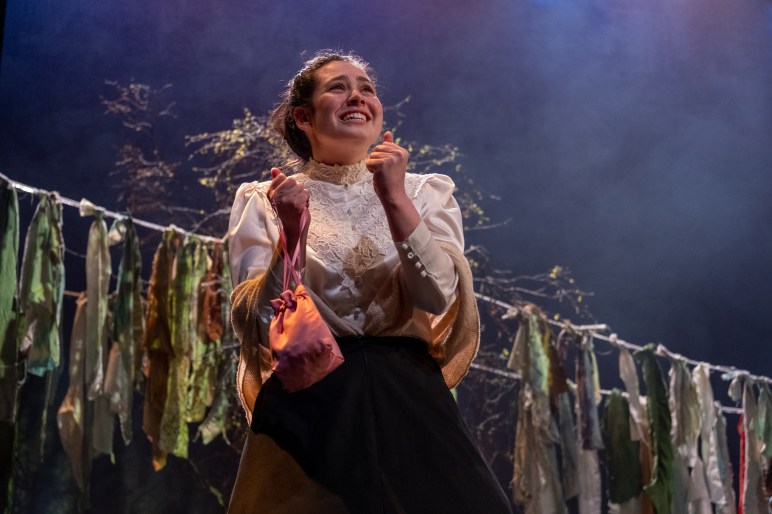
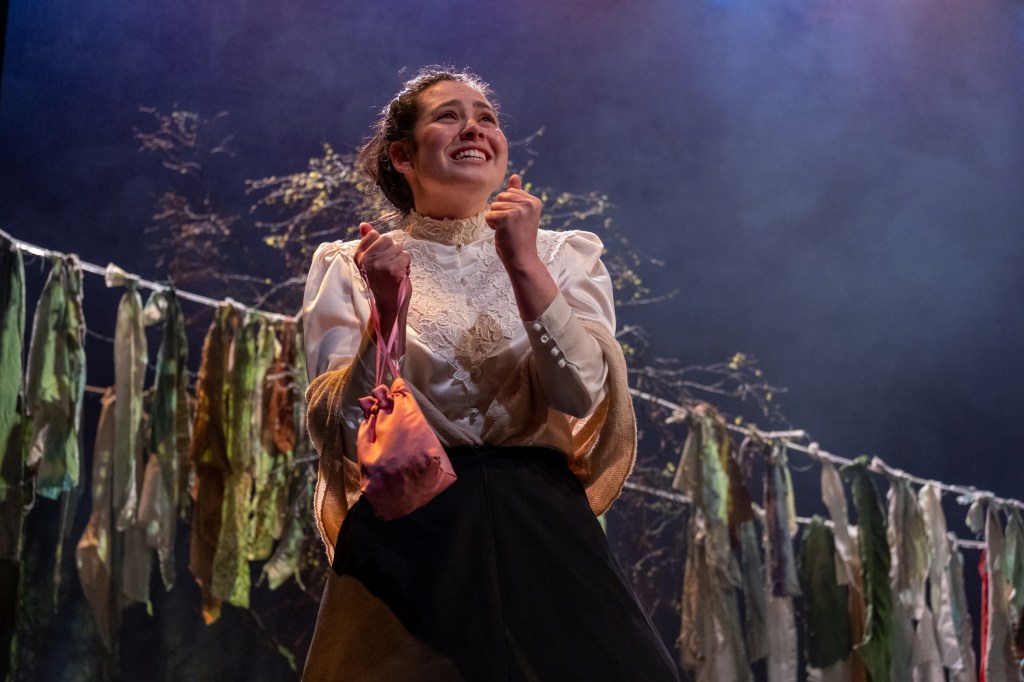
In Highland folklore people tied rags or ‘cloots’ to special trees to wish for good things. It still happens – and it’s the vibrant heartbeat in a new production that opened on Saturday.
After seeing The Wound, The Rag And The In-between, your first wish might have been to time travel back 24 hours just to see this performance unfold again.
But maybe the biggest wish that should be tied to the branches of the majestic clootie tree at the heart of the one-off play is – it must be seen by more audiences soon!
New company of early career theatremakers, Vivid Roots Collective, commissioned the play, initially to explore gender inequality in medicine.
Now – after some years of research and development, rehearsals and evolution as the project progressed – writer Annie MacDonald’s first stage play has blossomed into a Highland story that bristles with humour, pathos, a sense of outrage, grief – and hope.
A double timeline explores the true facts behind a Victorian death when a present-day young journalist returns home to the Highlands to research it.
Five characters’ stories toggle the audience back and forth in time for a fast narrative charged with dark humour and a range of themes – from trust, loneliness and class divide to a sense of belonging.
An acute portrayal of both past and present infused the action – from ‘fan fiction’ to yesteryear’s embroidered handkerchiefs – adding a clued-up feel for contemporary audiences asked to enter the past.
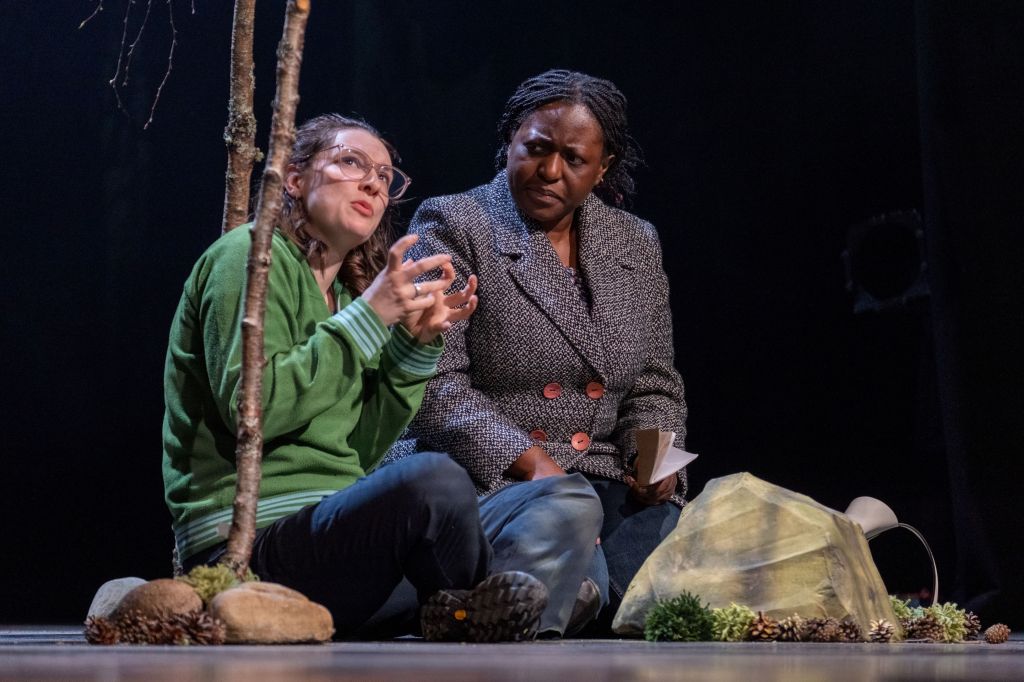
Cindy Awor created a dedicated contemporary journalist in Lubna – back up from Glasgow and questing for a lost grave. She would love to work back in the Highlands the playwright reminds us, but for a long time sees herself as an exile,
There’s a clever scene later on in the packed 90 minutes when the reporter is at her desk weighing up the possibilities of some appropriate headlines for her mystery body story. But at first introductions, Lubna’s credentials as a work-obsessed journo were set out.
“Can you not live your own life for once and not be … Louis Theroux?” her gay friend Niamh joked at the clootie tree, soon outed as a sceptic of the site she calls a “disgusting mess”. Actress Megan Macdonald created a switched-on Niamh, excited by life in nature – the possible pine-marten ‘scat’ she sees and the airborne merlin she hears. But informing Lubna ‘No, I’m not playing around with cloots – it’s a step away from cults!’, Niamh won’t wish by adding a rag for her partner Ailie’s mystery illness, saying she trusts in the NHS and ‘… I’ll take the cold hard science any day of the week’.
Like nineteenth century Highland estate worker Torcal – housemaid Mairead’s impulsive brother – Niamh becomes a character who is transformed by the end of the play.
Tiger Mitchell’s spirited Torcal is less concerned by the siblings’ mentally troubled mum than Mairead, and this strand allows the playwright to reveal some of her research into the cruelty the mentally ill could face in the Highlands of that earlier time. As Mairead, Rosemary MacDonald quietly inhabits the cautious, knows-her-place maidservant who impatiently tolerates a growing friendship with the lonely upper-class Helena. Appearing statuesque in her pristine Victorian costume, Poppy’s Helena doesn’t see anything wrong with dressing up like Mairead to learn to hang out washing – with comic results. But class-conscious Mairead cautions ‘Stick to the code, it keeps us safe’.
Yet the audience is shown how the friendship enriches both lives. Mairead revealed her fears of developing mental illness to Helena – who confessed her loneliness, sent North by her father to “die of boredom”.
Later, Mairead accurately described Helena, the one we too can see with – “excessive glee and unbridled hope” and it’s to Helena that writer Annie MacDonald gives some of her most poetic lines, such as cloots “a river of stars working together”.
As medical challenges emerged and plot twists took the audience by surprise, the action builds to a – literally – stormy climax. There’s a passionate speech about grief that reaches out to yank on the audience’s emotions. It’s a highspot that pinpoints how it feels to suffer loss, Annie MacDonald’s script movingly raw on a world tilted off-axis by illness … ‘Grief is like walking on a frozen lake. Will it crack?… Step – pause. I repeat this till I make it to the other side … That’s when I realise, this ice is floating on the f***ing sea! I’m lost and consumed and it will go on for ever!’.
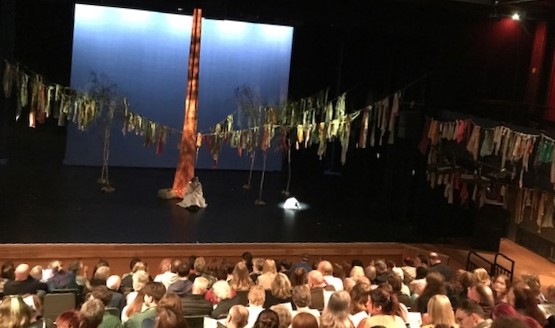
The stageful of colourful cloots around the tree literally set the scene – though it could have made the actors’ action seem static in other hands than those of director Keira Smith.

Lighting designer Daniel Pirie’s responsive lighting shifts added daybreak, Lubna’s tiny office stage right, the loud lightning storm, a dramatic red line of light at one huge moment and the atmospheric between-scene shifts when the cloots or hanging washing come up as elegant black silhouettes across the stage.
The play came alive as it started, opened with the outdoor sound of birdsong and a little later the call of a merlin, adding its own power. With the constant shift between the past and present, characters had variable length of scenes to keep the audience engaged, moving us between the past and present action. It often brought comedy as the changes could literally leave one word hanging before the next scene chimed in with its own word, though more might have been made of those.

At January’s first Spark playwrights’ festival at Eden Court, Caithness playwright George Gunn considered Highland theatre and presented what fellow Highland theatremaker Matthew Zajac called a “manifesto”. Describing how Highland theatre should be in this era, following its own strong roots, Gunn saw the challenge as: ‘… to create a theatre with love at its core, poetry on its lips and passion on the stage … a theatre that can show what it means to be alive here, now, today …’.
The writing in Annie MacDonald’s stage debut does it all, highlighting social issues such as women’s sometimes poor treatment by medicine, adding poetry and passion to her storytelling with positive themes of renewal and the search for love.
This triumph from Vivid Roots Collective sets a high bar for the new generation eager to create their own Highland theatre – and the play needs to be given the chance to be seen again in Inverness, across this area and beyond. MC
The project was funded by the National Lottery via Creative Scotland and supported by Eden Court. Find out more about Vivid Roots Collective which aims to make it easer for Highand theatremakers to work locally and to contribute to a culture of professional performing arts in the area HERE A couple of episodes of podcast Stories Of Scotland, run by Annie MacDonald and co-host Jenny Johnstone, offer more on the true story behind the mystery body and another on the importance of clootie folklore as part of our heritage HERE
QnA with insights … and hopes
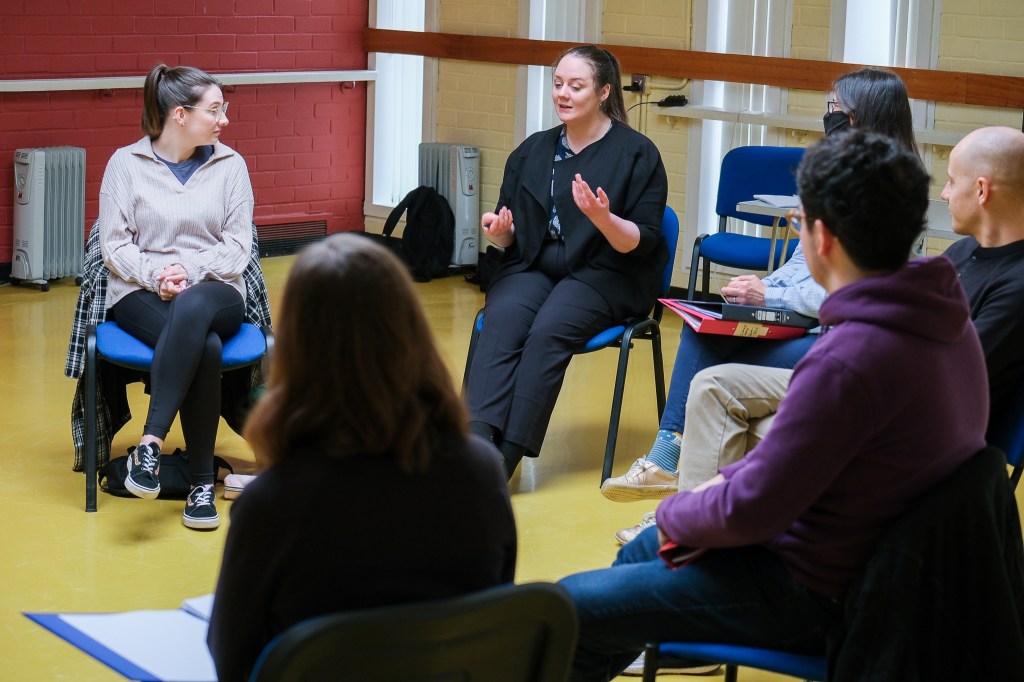
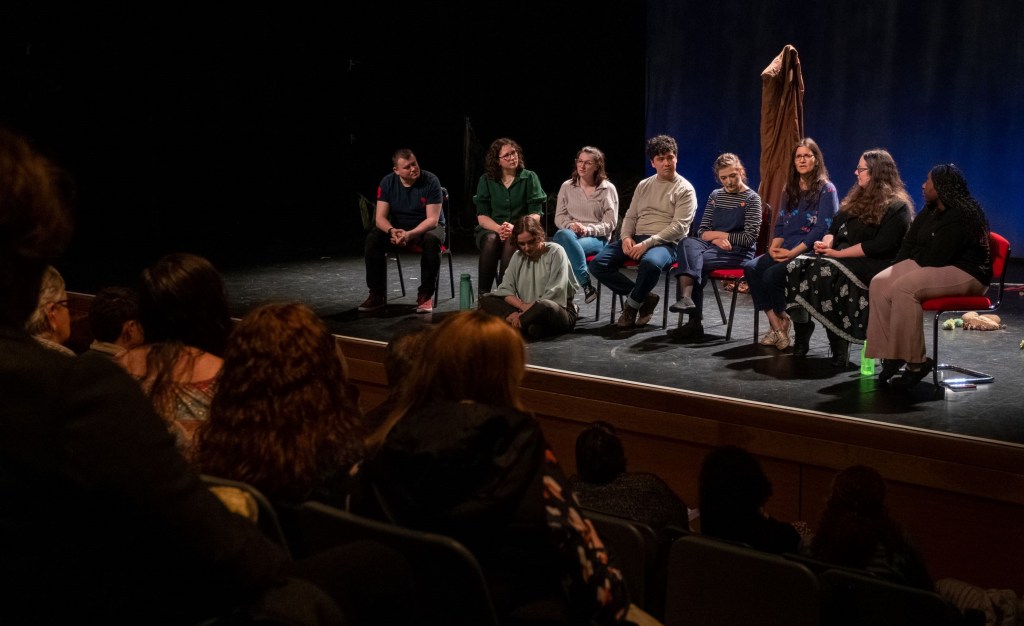
AFTER the play, a QnA gave a glimpse of so much that had gone into the play – from the tree itself, to making the show as sustainable as possible(“a lot of old stuff from everybody” for the set), asking Annie MacDonald about her inspirations (including a “throbbing anger” at things she encountered) and a word with each actor about their experiences. “Yes, it was a challenge!” one of the team replied. “You’ve smashed it!” yelled back an audience member, setting off a spontaneous round of applause for the show from the crowd. Hope for the return of the play shone through in the questions from the audience and a clear hope that this group – which had 16 Highland-based artists over the whole project – might be together on a stage in the future, perhaps a tour – if they could source more money, for this Highland story. The session ended with the team leaving the stage “…things still to get out in the van” from this hands-on theatre company making future plans. As producer and CEO Laura Valerie Walker said: “All of us here are at early stages in our careers – and these are connections that will last for the rest of our careers.”
 So impress me