
Edit Maggie & Me to create a Scottish classic
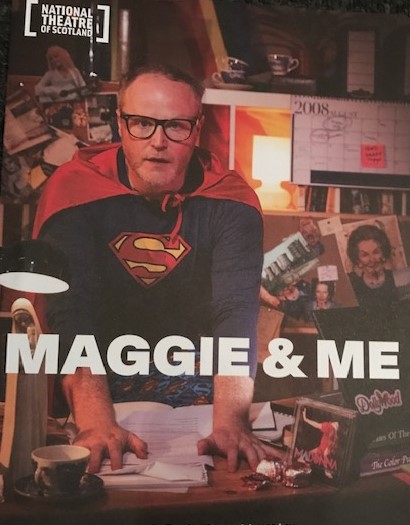
Maggie & Me | National Theatre of Scotland | Tuesday, May 15 | OneTouch, Eden Court, Inverness
THERE are so many reasons Scottish writer Damian Barr’s lifestory Maggie & Me should be a triumph onstage.
Instead, it was a long drawn-out trial which I wouldn’t wish on any audience in its present form.
There is so much that is good about the too-long, incident-packed play which has the potential to be a Scottish classic. Glimpses of the jokey one-liner fest with real darkness from gay writer and popular TV presenter Barr’s book were present from the start in the script.
Planning to write his memoir from a secure present in 2008 with his husband in Brighton, the writer gets a publishing contract and heads for his writing shed to recapture his often difficult past – “I can tell my story and help people”. To do it, he has to find his voice and retell the good memories. But to do it, he also has to face bad ones – and relive them.
Somewhere early on, the play from the National Theatre of Scotland gives way to the temptation to tell it all. And the urgency and real drama of the story of a gay Scottish boy finding his way through poverty, peer bullying and abuse to find the courage to come out and live his life, is cluttered up and weakened by so much going on, particularly in the first half.
In Maggie & Me, the late former Tory Prime Minister Margaret Thatcher is used as a foil – Beth Marshall bringing a loathsome, blackly funny character to the drama to challenge Damian.
The portrayal of the young Damian’s developing friendships, with best pal Heather (a lovable portrayal from Joanne Thomson) and later lifelong crush Mark (Grant McIntyre makes him effervescent), is one of the most effective and heartwarming elements of the story.
The director rightly decides to leave the nightmare character of Logan, Damian’s mum’s later partner, as an invisible presence that hangs over the whole play, helping our imaginations create our own monster.
And the casting of Gary Lamont as the adult Damian with the child – Wee DB – played energetically by Sam Angell, allows an authentic questioning of writer Barr’s past recollections, as he relives them years on.
Music sets the scene for a past that includes tutued majorettes twirling to Yazz and creates sparkling dance moments for the cast in Bennetts nightclub with Rhythm Of The Night.
If that caters for an older audience nostalgically looking back, the many onstage camera close-ups of the cast filmed by the actors and shown on the TVs all over the set looked to a crucial target 14+ audience for this play, used to consuming life on a phone and digital screens.
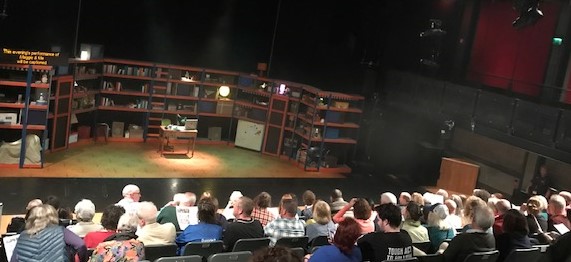
Many of the possibilities this play and its script offers could be played out, thanks to the set from Kenneth MacLeod. Initially there were the busy industrial-looking shelves of Barr’s Brighton shed, quickly adaptable to a library and later a holy grotto. And the centre-back high structure with winding Dynasty stairs to a vantage point and backdrop of Lanarkshire and Thatcher-closed former steel mecca Ravenscraig, created dramatic backdrops to the action.
One example of great use of multi-media led to the moment Wee DB and Mark added hair gel for their first important day at high school. No, Damian’s family didn’t have a camera. But Mark’s dad had a Polaroid and the picture with its signature white frame appeared all over the stage screens seconds later!
There are many moments where the story of Barr’s gay experience in Scotland sounds like the past: “There was no school disco for us where we could have our first kisses. No safe place for us to try out who we were.”
Times may have moved on since he initially began his literary memoir in 2008, but as Damian told Maggie in the play: “I’ve never seen a story like mine in a book – I don’t exist in fiction or in memoir. That’s part of the reason I’m writing this, to prove to myself that I exist, to show others they exist too …”
That experience is more frequent perhaps on book shelves and screens in 2024.
But this authentic, sometimes heart-stopping story still needs to be told. And this play needs a shorter running time – particularly the first half – to let Barr’s powerful storytelling shine through for a new generation that needs to know its past. MC
 So impress me