
Book festival
REVIEW: Seeds of hope for the elm from writer event
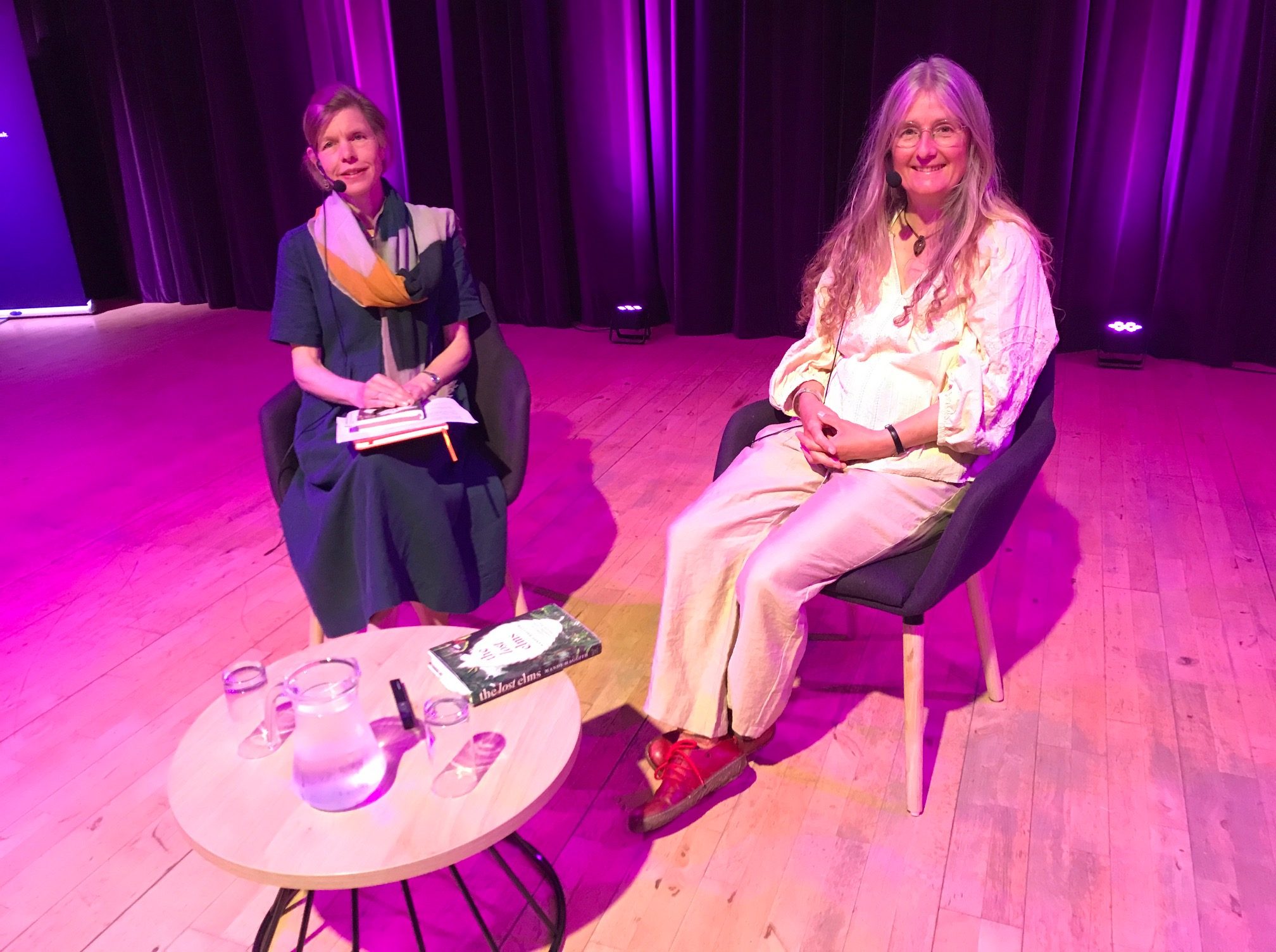
Nairn Book & Arts Festival | Author Mandy Haggith talking about her book The Lost Elms | Nairn Community & Arts Centre | Thursday, September 2 | 10.30am
by Margaret Chrystall
It took just a few minutes of Mandy Haggith sharing the opening of her latest book The Lost Elms in a reading from it to understand why it had been awarded the Richard Jefferies Award for outstanding nature writing in 2025.
As poet, writer, researcher, lecturer at UHI (University of the Highlands and Islands) and long-time forest activist, among other things, the writer has all the skills to get across the story of the UK’s elms, ravaged by Dutch Elm Disease, but with hope lurking in the science and close study – and a possible future.
“Touch wood!” as Mandy smiled halfway through her talk.
But it wasn’t just the factual education the audience was treated to over the hour, part of it photographs (some Mandy credited to Assynt’s Chris Puddephatt) shown on a big screen with elms, the bark, the leaves and a Constable landscape painting showing the trunk of the tree.
That was probably the quickest way to get to know the tree that was our subject, after chair Alison Bertlin asked Mandy how younger people – who may never have seen a live elm tree – would know what it had looked like. It should also have helped people who may already have forgotten exactly how the trees appeared before the beetle transporting the Dutch Elm Disease (DED) fungus had killed most of the ones that used to be a common sight.
Probing questions from our chair and questioner Alison Bertlin ranged over the book’s broad overview which includes history, the elm’s place in folklore, its life in other countries, the story of the disease, attempts to halt DED and how to protect what was left for the future. The book also offers a detailed history of everything from the tree’s uses over the centuries, to profiles of individual trees.
That’s where the book and the talk crossed over, as Mandy explained how she had first encountered the late Beauly Priory Elm – known as The Guardian of the Gateway. It was planted by monks in the 1200s, but showed signs of damage as the 2020s got underway. It was marked with a ceremony in the village in September 2022 and commemorative publication, Guardian of the Gateway: 800 Years of the Beauly Wych Elm.
And Mandy was initially invited to write something for the occasion about that dying elm – known as the oldest in Europe. What she wrote became not the “mournful” piece she had expected to write. But as she “spent time with the tree as it was dying”, something more “positive and joyful” took shape and her “performance poem” Elm Tree Talk (included at the back of the book) was the result.
The much wider remit of The Lost Elms has led from it. As Mandy writes in her acknowledgements, that became “a subsequent odyssey around the world of elms and encounters with so many enthusiastic and helpful people”.
The book alternates between chapters on death and life – and the writer’s grief over the death of her parents, as well as contemplating how we must face up to our collective grief over global warning and loss of species. As Mandy said in her talk, with global warning we all have to come to terms with our sadness over the impact it is having on the world.
After a question from the audience late on in the event, Mandy said: “I’ve been through my own process of feeling endlessly distressed and have to find ways to heal that in myself. But it’s been fascinating writing the book, people get in touch about elms in their garden or village and write ‘Mandy you might be interested…’ and I genuinely am! Faced with the growing environmental challenges, we all need the capacity to deal with them and work through – make this world a better place and make a future.”
Her event in Nairn Arts & Community Centre had begun with a reading from the beginning of The Lost Elms which set the scene. In it, Mandy explained that as a child, she had experienced an elm wood near her Northumbrian village family home dying, being cut down and yet still remaining a place of solace for her. But, as she read: “… it taught me that nature is precarious”.
Mandy revealed that elms in her home area of Assynt have not yet fallen prey to DED, as the beetle carrying it takes time to head North – but it is inevitable. Yet locals including schoolchildren keep an eye out for “die-off” and are involved through the Adopt An Elm scheme.
More discoveries from the talk included the subject of “mother trees”, that 5,000 years ago something killed off elms, how the trees may communicate underground, some species such as the English Elm brought from Italy originally are “gregarious underground”, how coppicing may work, finding seedlings long after a tree has gone, how Mandy has encountered healthy elms during visits to Mull’s Tobermory, also on Eigg and in Lewis and Skye.
As ever, the Nairn Book & Arts Festival audience had great questions to ask.
They ranged from wondering if chemists are trying to do anything to foil the fungus, have Chinese elms been cross-pollinated with ours, and Mandy’s answers were just as fascinating, if not always positive, though it was good to tap into her knowledge and discover the endeavours being made.
One questioner was sorry the book didn’t have illustrations – a decision down to a publisher, Mandy explained. But hearing that an artist brought up in the area had a pastel drawing of former elms there from before her art college days, Mandy thought that might be great for illustrations! A couple of audience members had questions about coppiced elms by the River Nairn, one hoping they might be resistant to DED.
And for anyone in any doubt about the magical nature of a growing, healthy elm and all the lives of plants and creatures that surround it and depend on it, there was Mandy’s final reading of her experience sitting by the Torbreck elm that lives near her on a neighbour’s land in the North West Highlands: “If the tree feels each individual leaf tremor, like we feel drops of water on our skin, then what stimulation it must get from its tens of thousands of little leaf motions? The tree rustles as if in affirmation of this thought. Above us both, high on the crag, an aspen responds to the same breeze with hysterical fluttering, and a birch, even higher up on the skyline, nods its graceful crown. It’s quite likely that under the soil they are having even more intricate conversations.”
Just before the reading, chair Alison Bertlin had asked Mandy a final question – what could we all do for the elms?
“Plant them,” Mandy said simply. “Each new seedling is a bit of hope for the future.”
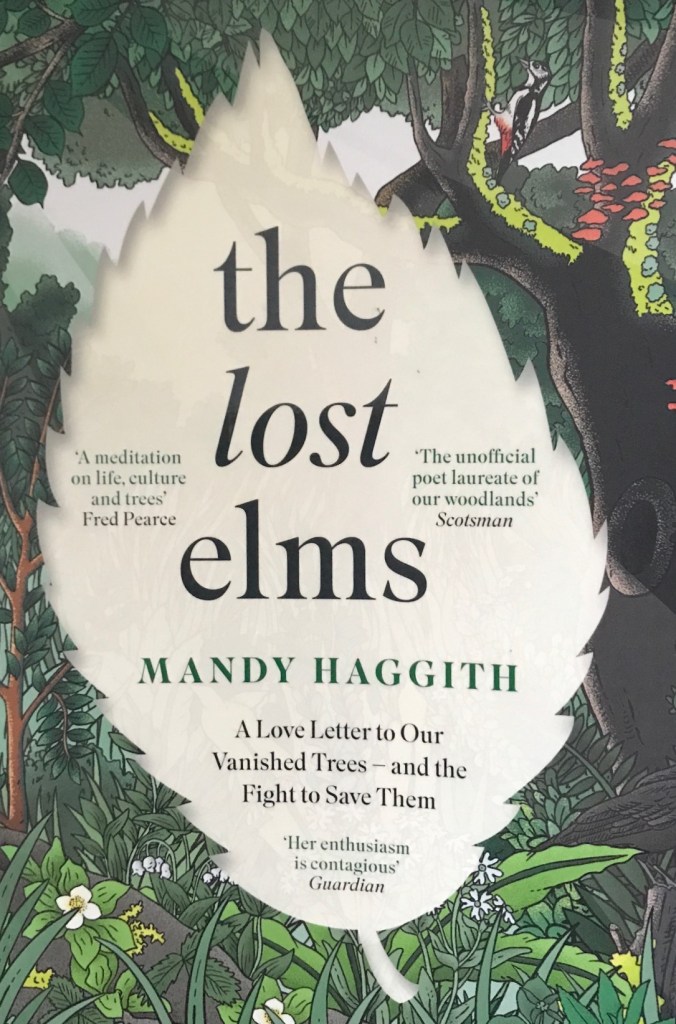
Mandy Haggith’s book The Lost Elms: A Love Letter To Our Vanished Trees – And The Fight To Save Them is out in paperback (£14.99).

